
Why Agentic Analytics Is Turning Every Tech Role Into a Data Analyst. Including Yours.
Every tech role is absorbing work that used to belong to a specialist. Here is what is driving it and what to do about it.

If you work in tech right now, regardless of your role, this one is for you.
I get some version of this message almost every day:
"Is it just me, or is AI starting to do the work people on my team used to do?"
It is not just you. And it is not just data analysts who are feeling this.
I have been in tech for over 12 years. I have watched tools change entire job categories before. But what is happening right now is different. It is not just one role being disrupted. It is every role being asked to absorb work that used to belong to a specialist.
What is Agentic Analytics?
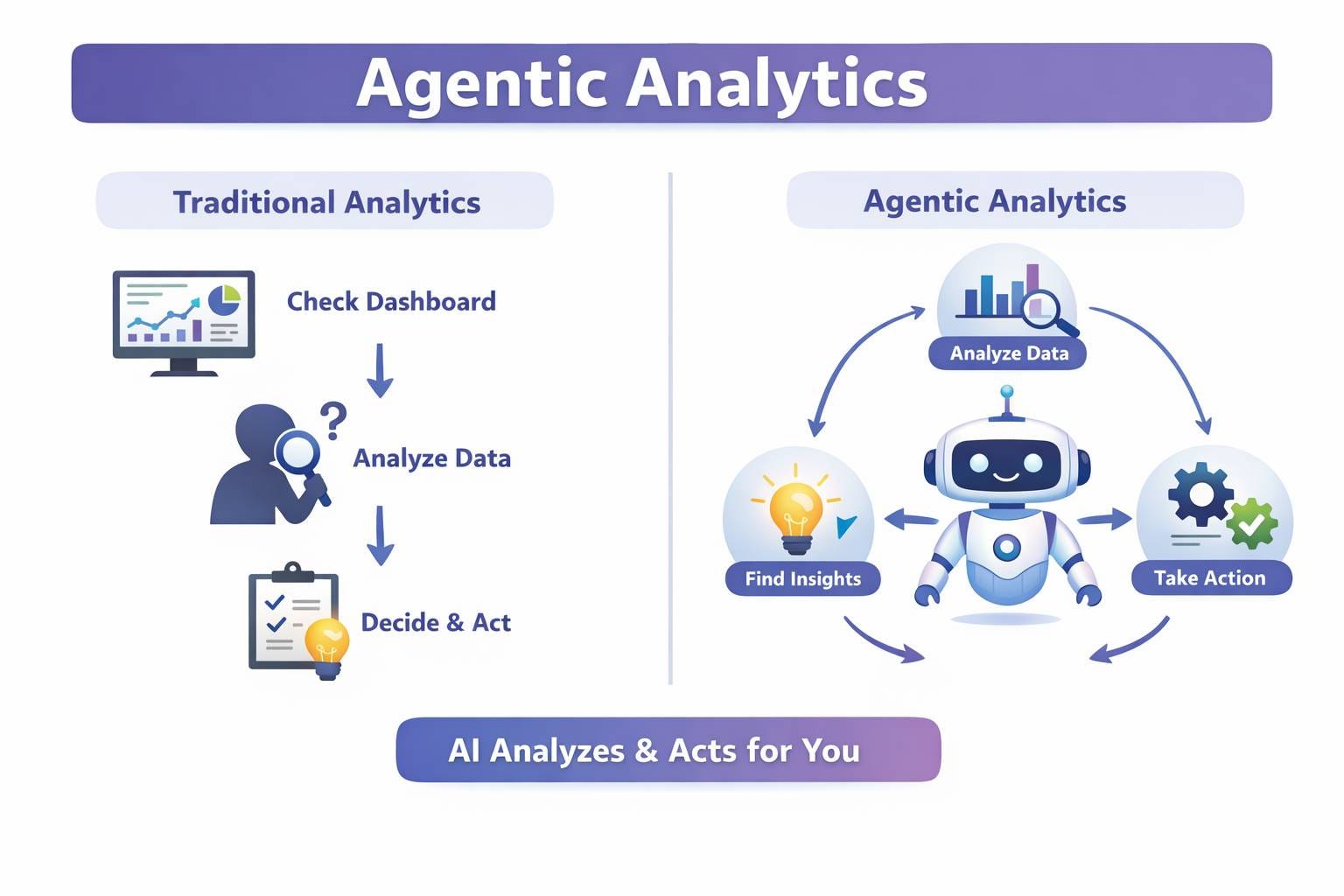
Agentic analytics is when your data doesn’t just sit there waiting for you to analyze it. It uses AI agents to look at the data, figure out what matters, and actually take action based on it. It’s basically AI Agent but built into your data and dashboards.
A Real Story From a PM Friend at Meta
A friend of mine is a PM at Meta. She recently told me something that stopped me mid-conversation.
Her team lost their data scientist. Leadership did not backfill the role. Instead, the team was told to start using agentic analytics tools and pull their own data going forward.
She was honest with me. She does not like it. She did not sign up to be an analyst. But she has no choice. If she wants to do her job well, she has to learn a skill set that was never part of her role description.
That story is not unique to Meta. It is a pattern I am hearing across companies, across roles, across levels.
It is not just Meta. I see it on my own team too. Most people I work with can now run their own experiments without looping me in at all. They only come to me when they need something customized, something the tool cannot figure out on its own. A year ago, that was not the case. The analyst was the bottleneck for everything. Now the bottleneck has moved, and what is left for me is the work that actually requires judgment.

Airtable for Interview Prep Template
Airtable is an AI workflow platform that lets you build structured, goal driven systems on top of your data. This is one of those tools I wish I had years ago. I built this interview prep workflow where I just drop in a company name and field agents do the rest: analyzing financials, researching product launches, scoping out competitors, pulling together interview tips. It’s like having a research analyst on call. It auto-updates before each interview and I can add new companies anytime. Structured, automated, actually helpful. You can access the Airtable interview prep template here. Thanks to Airtable for sponsoring this newsletter.
What does Agentic Analytics Looks Like in the Real World?
If you are curious, what Agentic Analytics looks like and when will it be live. Well, it’s actually already live. Sharing examples of Agentic Analytics products are are live and in production today.
1. Snowflake Cortex Analyst (NL to SQL using a semantic model)
What it does: Lets users ask questions in plain English and generates answers and SQL based on a defined semantic model. A business user types a question, Cortex Analyst writes the SQL, runs it, and returns an answer. According to Snowflake’s own benchmarks, it reaches around 90% accuracy, up from 51% when using a general purpose LLM directly. Bayer is already using it in production.
Why it matters: It is a clean example of the core theme in this newsletter. The agent is only as good as the semantic layer behind it. Without the guardrails analysts build, the accuracy collapses. The tool does not replace the analyst. It depends on them.
2. Databricks AI/BI Genie (natural language analytics in Genie spaces)
What it does: A chat interface for business users to ask questions about data. Teams configure Genie spaces with datasets and guidance so Genie can translate plain English questions into analytical queries. HP and 7-Eleven are already live on it. 7-Eleven's senior director of data put it plainly: their business teams now access data directly without waiting on analysts.
Why it matters: It shows exactly the shift happening across teams right now. The analyst no longer writes every query. Instead, they curate the Genie space, set the guardrails, and validate the outputs. The work moves upstream.
3. Microsoft Fabric Copilot and Copilot in Power BI
What it does: Copilot is now enabled by default across Microsoft Fabric and Power BI. Business users can ask questions in plain English, and Copilot builds the report, writes the DAX, and summarizes the insights. Microsoft's documentation is explicit that it is designed for users without technical backgrounds who would otherwise burden their data teams.
Why it matters: This is the most enterprise-normal path. Millions of companies already live inside Power BI. Copilot does not require a migration or a new platform. It shows up inside the tools people already use, which means this shift is happening whether teams plan for it or not.
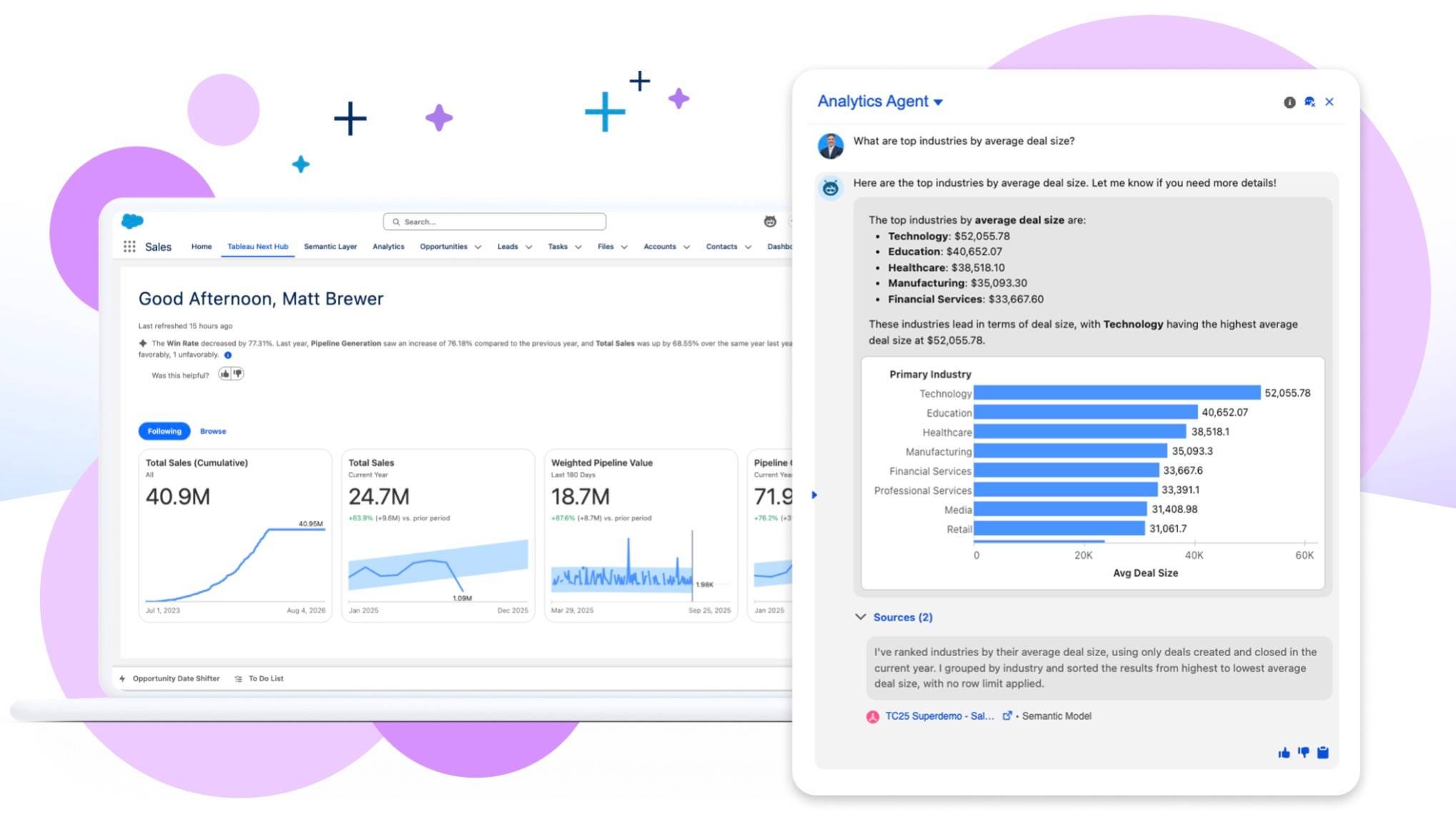
4. Tableau Einstein Copilot for Tableau (AI assistant inside the analytics workflow)
What it does: An AI assistant built into Tableau that automates parts of the analysis workflow including data prep, calculations, and dashboard tasks. It handles the repetitive mechanical steps so analysts spend less time on setup and more time on interpretation.
Why it matters: It is the most demo-friendly example of this shift. Fewer repetitive steps, faster output, but the analyst judgment is still front and center. You still have to know what good looks like to use it well. AI handles the mechanics. You handle the meaning.
Four of the biggest data platforms in enterprise tech are all shipping the same message: your non-technical teams can now do this themselves. And your analysts need to evolve into the people who make that possible.
Let’s Zoom Out for a Bigger Picture
Here is the bigger picture. Every role in tech is starting to absorb work that used to require a separate specialist.
PMs are being asked to pull their own data and run their own analysis.
Engineers are being asked to write their own documentation, tests, and code reviews with AI.
Marketers are being asked to generate and iterate on creative without always looping in design.
Analysts are being asked to own the business context and semantic layer that the AI depends on.
The means that these AI tools are collapsing the distance between roles. And companies are using that as a reason to run leaner. This is not a data analyst story. It is a tech worker story.
The Skills That Now Matter Across Every Role
Here is what the research is actually saying. According to AtScale’s benchmark testing, LLMs get it wrong over 80% of the time when working directly with raw data. But when grounded in a semantic layer that encodes business meaning, accuracy climbs to 92 to 100%. That is not a small improvement. That is the difference between a prototype and a production system.
That number matters for everyone, not just analysts. Because if your team is now expected to use AI to pull data and surface insights, someone has to be the person who knows when the output is wrong. Someone has to ask:
Is this metric defined the way our business actually uses it?
Does this result reflect reality, or is something off?
Are we making a decision based on data we can actually trust?
That is not an analyst skill anymore. That is a baseline skill for anyone who works with data, which in 2026 is almost everyone in tech.
The skills that matter now are not about the tool. They are about judgment, context, and knowing enough to catch what the machine misses.
What This Means for You, Whatever Your Role
If you are a PM, an engineer, a marketer, an ops person, or yes, an analyst, here is the honest version.
The question is no longer whether you should learn these tools. You will have to. Because everyone around you is going to.
The real question is whether you are building the skills that sit above the tools. The skills that make you the person who guides the system, validates the output, and connects the data to a real business decision.
My friend at Meta does not have to become a data scientist. But she does have to understand enough to know when the output she is looking at can be trusted. That is a very different bar, and it is one she can reach.
And so can you.
A Final Thought
Change in tech has never scared me. What scares me is when people do not see it coming. Agentic analytics is redistributing responsibility.
I am curious, what part of this is showing up in your role right now? Has your team lost a specialist and been asked to absorb that work?
✨ What’s New with me?
I just became an official LinkedIn Learning instructor and launched 3 courses on AI, data science and vibe coding all at once. Yes, going all in! You can find all of them here. On top of that, March has been packed personally. Girls’ trip to Cancun, a work travel, spoke at 2 events at SXSW in Austin, and then a personal trip to Antalya, Turkey with my brothers. I also hosted my first ever in-person event in Seattle, 75 attendees, 41st floor of a building in downtown Seattle. I am nervous and excited. You can follow along all these adventures and photos on my socials.

#3 caught my attention. I’m curious how this changes the role of analysts in practice. If Copilot can write DAX, build reports, and summarize insights, does the real leverage become business context + validating outputs?
Feels less like analysts disappear and more like the job moves upstream.